



Rose Gold Engagement Rings With Lasting Appeal
Rose gold has a warmth that traditional white metals cannot quite replicate. Its soft pink hue complements diamonds without overpowering them, making it a distinctive choice for engagement jewelry.
Yet appearance is only part of the decision. Rose gold engagement rings vary in color, durability, setting design, and maintenance needs. Understanding these differences helps buyers choose a ring that looks beautiful and works for everyday wear.
Why Rose Gold Has a Distinctive Color
Rose gold gets its pinkish color from copper mixed with pure gold. Since pure gold is naturally yellow and relatively soft, jewelers add other metals to create stronger alloys suitable for rings.
The amount of copper influences the final shade. Higher copper content generally produces a deeper reddish tone, while different alloy combinations create softer pink variations.
Two common options are 14K and 18K rose gold.
-
14K rose gold: Contains 58.3% pure gold. Its higher proportion of alloy metals generally provides better resistance to everyday deformation.
-
18K rose gold: Contains 75% pure gold. It typically has a richer gold tone and may show wear more readily.
Neither option is automatically better. A person who works frequently with their hands may appreciate 14K gold, while someone who prefers a higher gold content might choose 18K.
Choosing a Diamond That Complements the Metal
The diamond’s cut and setting influence how it looks against rose gold. Round brilliant diamonds offer strong sparkle, while oval and cushion cuts create softer silhouettes that suit the metal’s warmth.
Color deserves particular attention. A near-colorless diamond can look slightly warmer when surrounded by rose gold, especially in settings where the metal is visible beneath the stone.
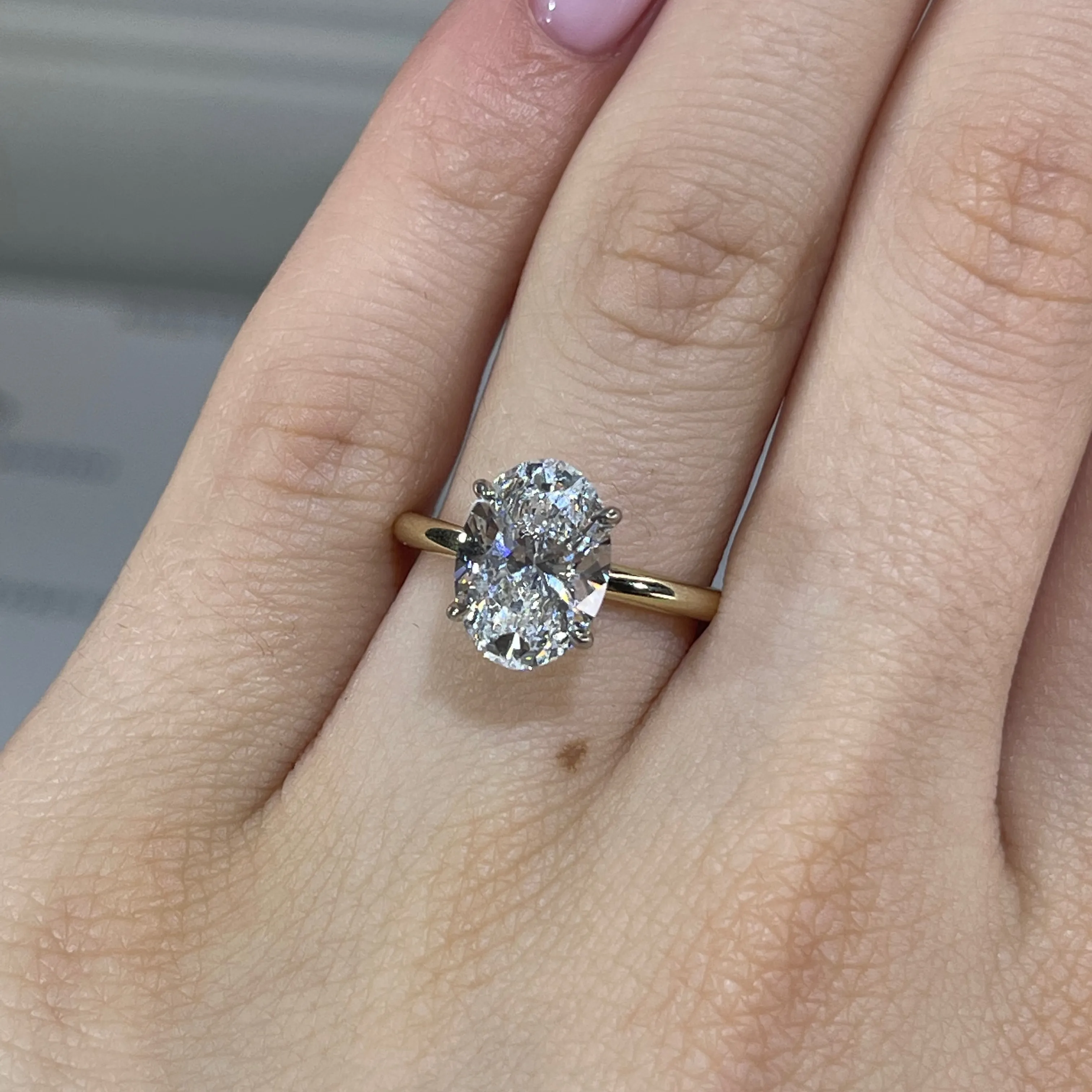
Buyers who prefer a bright white diamond can consider white gold or platinum prongs on a rose gold band. This two-tone construction reduces the warm reflection around the diamond while preserving the band’s pink appearance.
For shoppers comparing natural stones with lab diamonds, the grading criteria remain the same: cut, color, clarity, and carat weight. Laboratory-grown diamonds have essentially the same chemical, physical, and optical properties as natural diamonds, although their origins differ.
Ring Settings That Work Well With Rose Gold
Solitaire settings
A single center stone keeps attention on the diamond and the metal’s natural color. A six-prong setting can provide additional security, while four prongs reveal more of the stone’s outline.
Halo settings
Small diamonds surrounding the center stone create a larger-looking sparkling surface. However, the additional stones and prongs require more careful cleaning and periodic inspection.
Three-stone settings
Side diamonds add visual width and can balance an elongated center stone. Their proportions matter because oversized side stones may compete with the main diamond.
Does Rose Gold Suit Every Skin Tone?
Rose gold’s combination of pink and yellow undertones makes it versatile across a wide range of complexions. It can create a gentle contrast against cooler skin tones and complement warmer undertones.
Still, personal preference matters more than traditional skin-tone rules. Lighting, band width, and the exact alloy color can change how a ring appears.
Trying on several shades in natural daylight often provides a more reliable impression than comparing heavily edited product photographs.
Everyday Durability and Maintenance
Rose gold is suitable for daily wear, but it is not scratchproof. Its copper content contributes to strength, although durability also depends on the alloy composition, band thickness, and setting construction.
Unlike rhodium-plated white gold, rose gold generally does not require routine replating to maintain its color.
For cleaning, use lukewarm water, mild dish soap, and a soft brush. Avoid chlorine, abrasive cleaners, and harsh chemicals that may damage the alloy.
People with copper sensitivities should also check the metal composition before purchasing.
Details Worth Checking Before Buying
A beautiful ring should feel secure and comfortable during ordinary activities. Before purchasing, consider these practical details:
-
Band thickness: Very thin bands may bend more easily, particularly when supporting larger center stones.
-
Prong security: Check that the diamond sits firmly and that the prongs are smooth.
-
Wedding band compatibility: Low-set engagement rings may require curved wedding bands.
-
Grading documentation: Request an independent diamond grading report and confirm the stone’s origin.
-
Resizing policy: Intricate designs and eternity-style bands can be difficult to resize.
These details often have a greater effect on long-term satisfaction than small differences in diamond size.
A Ring That Fits Beyond the Proposal
The appeal of rose gold engagement rings lies in their balance of warmth, versatility, and understated character. Choosing the right design means considering daily habits alongside appearance.
For couples considering lab diamonds, independently graded stones offer another option without changing the ring’s fundamental design possibilities.
A well-chosen ring should fit comfortably, protect its center stone, and complement the jewelry its wearer already enjoys. Those qualities will matter long after the proposal.